How long does a retail fitout take? A backwards plan
A retail fitout takes as long as its slowest dependency, which is often design approval, landlord or mall consent, or long-lead fixtures rather than the site works. Start from the opening date, work backwards through each gate, and confirm every duration with the people who will deliver it.
Why there is no single answer
A kiosk refresh and a new flagship store are both called fitouts, but they have very different scope, approvals and lead times. The duration that matters is the one for your store, with your landlord, your design and your suppliers. Published ranges are a sense check at best. A plan built from your own dependencies is more useful than an industry average.
The stages that drive a fitout timeline
| Stage | What usually controls its duration | Who should confirm it |
|---|---|---|
| Design and drawings | Number of review rounds and how quickly decisions come back | Design lead and brand team |
| Landlord or mall approval | Submission requirements and the review cycle in the lease or fitout guide | Project manager |
| Statutory approvals | Requirements identified by the responsible local professionals | Appointed consultants |
| Long-lead items | Fixtures, joinery, signage and equipment production after drawings are frozen | Procurement lead and suppliers |
| Site works | Scope, access hours, trades and any civil, electrical or HVAC changes | Contractor |
| Snags and handover | Inspection, rectification, testing records and acceptance | Site supervisor and client representative |
| Merchandising and opening | Stock delivery, IT, staff training and store setup | Store operations |
Plan backwards from the opening date
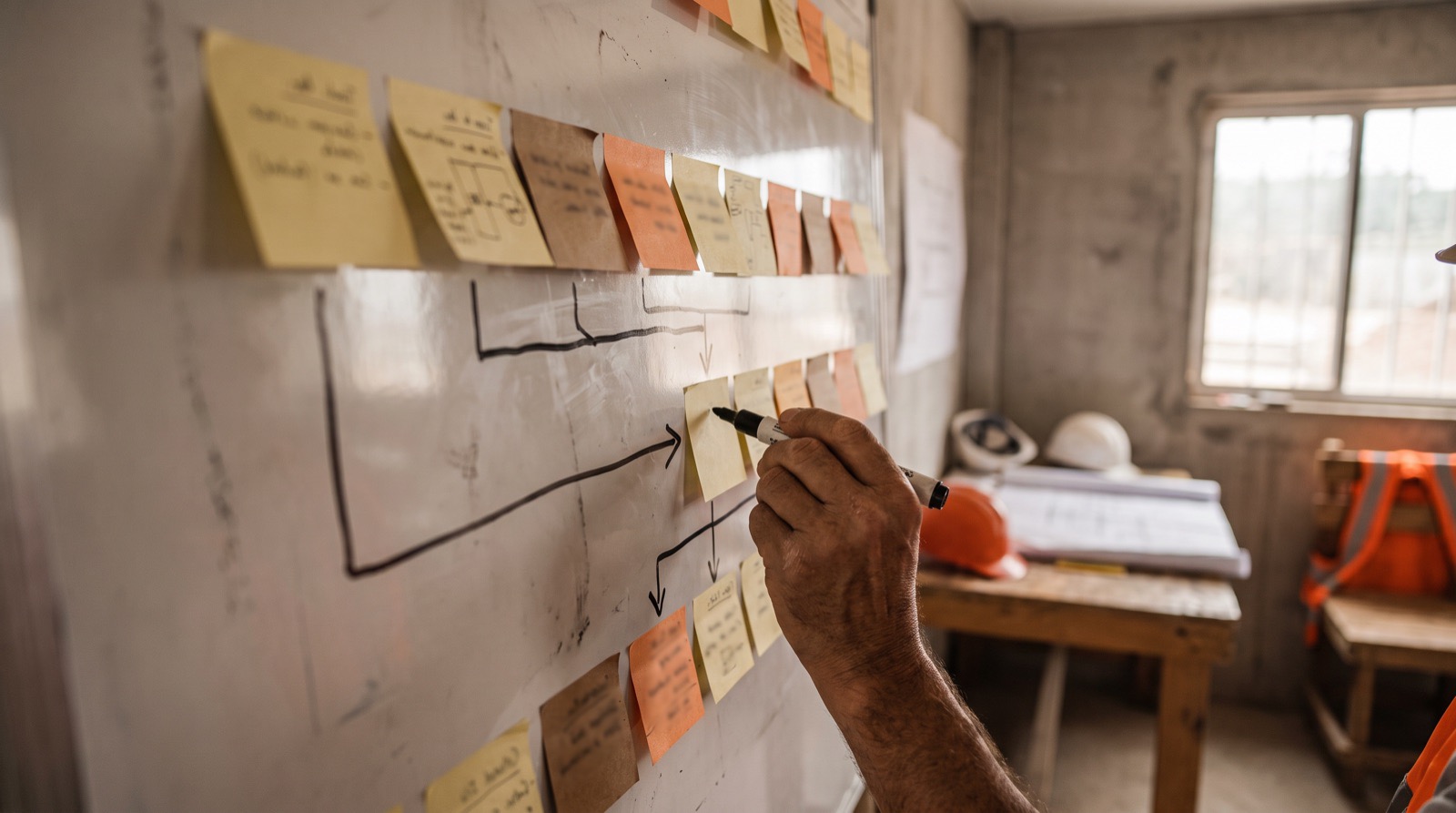
Write down the target opening date and the evidence needed to accept the store. Then place each gate in reverse: handover before merchandising, snag closure before handover, site completion before snags, and so on. Where a stage depends on production, such as fixtures, count backwards from the date the item must be installed to the date its drawings must be frozen. If the result is a design-freeze date that has already passed, the opening date is a risk to escalate now, not a problem for the site team to absorb later.
An illustrative backwards plan
Illustrative scenario only, not a benchmark: a store must open on 1 December. Store operations ask for the premises five days before opening, so handover is due on 26 November. The contractor needs a week to close snags and complete testing, so site completion is due on 19 November. The fixture supplier quotes production after drawing approval, plus delivery and installation time. If those durations put the fixture drawing freeze in mid-September, and drawings are still in review in October, the plan shows the conflict immediately. Replace every duration in this example with confirmed figures from your own suppliers and contractors.
Protect the dates that usually slip
- Freeze drawings for long-lead items first, even if other details are still open.
- Confirm landlord or mall submission requirements before design is complete, not after.
- Ask suppliers for production and delivery dates in writing, and record any change.
- Keep a buffer before handover for snags, not just for site works.
- Review the forecast against the baseline every week and record why a date moved.
Track the timeline across many stores
In a multi-store rollout, keep the same gates for every store so forecasts can be compared, but let each store carry its own durations and constraints. Report the stores whose forecast opening has moved, and the decision that would recover it, before reporting percentage complete.
Where Bullet fits
Bullet is in development. It is exploring how daily site updates, spoken by the people on site, can feed a reviewed record of each store’s progress against its opening gates. Bring your rollout plan to a guided demo.
Common questions
- How long does a retail fitout take?
- It depends on the store’s scope, approvals and long-lead items. The slowest dependency, often design approval, landlord or mall consent, or fixture production, usually sets the timeline more than the site works do. Build the plan backwards from the opening date with durations confirmed by the people who will deliver them.
- What usually delays a retail fitout?
- Late design decisions, landlord or statutory approvals, and long-lead fixtures, joinery or signage whose drawings were frozen too late. Snag closure and handover are also often squeezed when no buffer is kept for them.
- How do you plan a store fitout timeline?
- Start from the opening date and the evidence needed to accept the store, then place each gate in reverse: handover, snags, site completion, deliveries, drawing freeze and approvals. If a resulting date has already passed, escalate the opening date as a risk now.
Retail fitout backwards plan
A blank CSV you can open in Excel or Google Sheets. Adapt the fields to your project. No signup required.
Download CSV